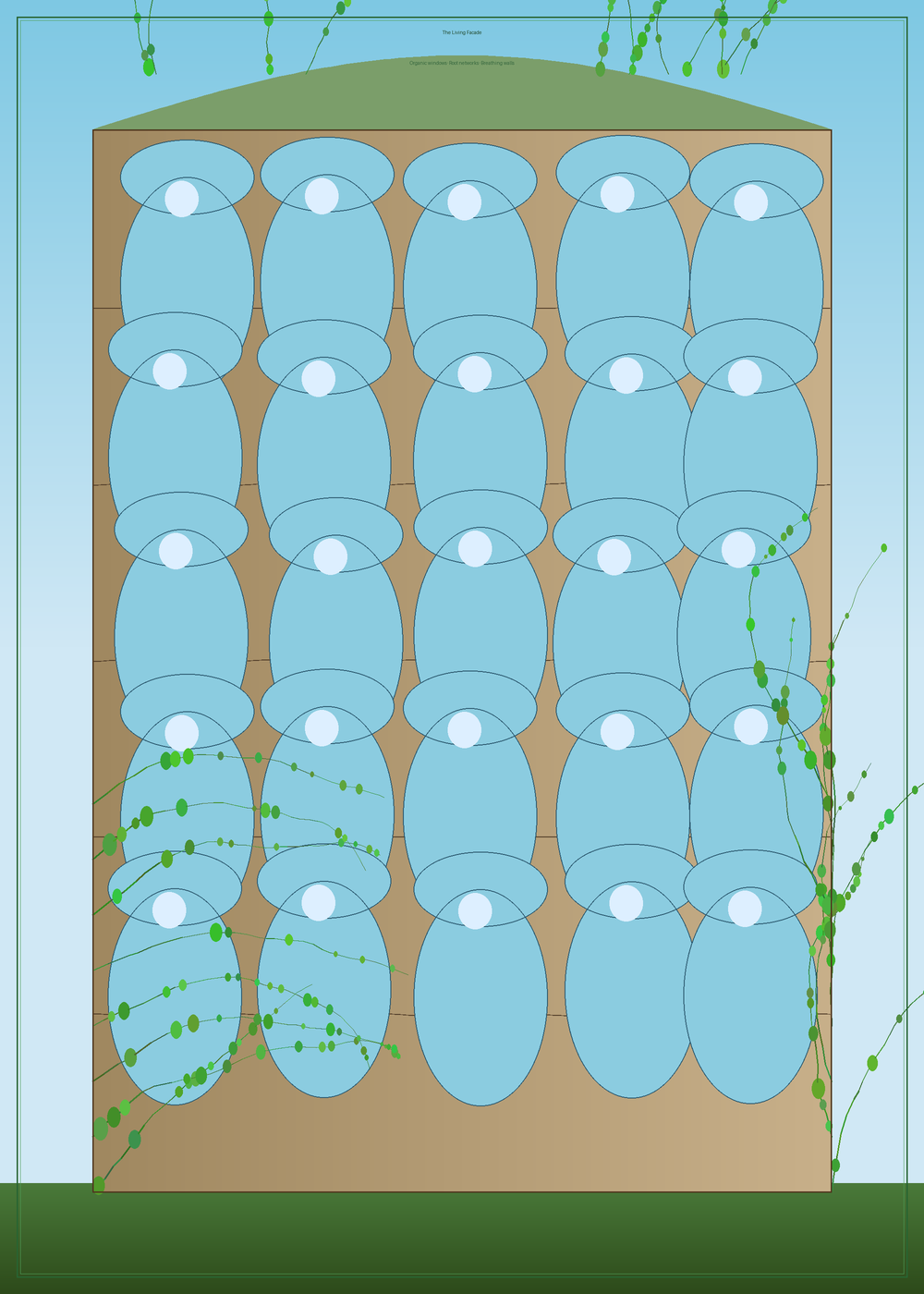
The Vision
Buildings grown, not built.
Living Architecture
The Living Age Initiative
The Living Age Initiative
An AI-driven platform for designing biological structures, organisms, and living materials — the Autodesk of biology.
Modern construction, manufacturing, and infrastructure are based on industrial-age engineering: assemble rigid parts, consume massive energy, replace when broken.
Trees self-assemble complex load-bearing structures. Coral builds mineral architecture from seawater. Fungal networks distribute resources with zero centralized control. These systems adapt, self-repair, and improve over time.
Our current tools only allow us to analyze biology — not design with it. That gap is the market opportunity.
| Traditional Engineering | Living Works |
|---|---|
| Design an object | Design a growth process |
| Manufacture materials | Grow materials |
| Assemble rigid parts | Guide biological development |
| Degrades, requires replacement | Self-repairs, adapts |
| Energy-intensive | Carbon-negative potential |
Living Works enables scientists, architects, and engineers to design biological systems the way Autodesk enables buildings, Unity enables games, and Blender enables graphics — but for biology.
Instead of designing objects, Living Works designs growth rules. Natural language prompts become growth models. Growth models become organisms, materials, and structures.
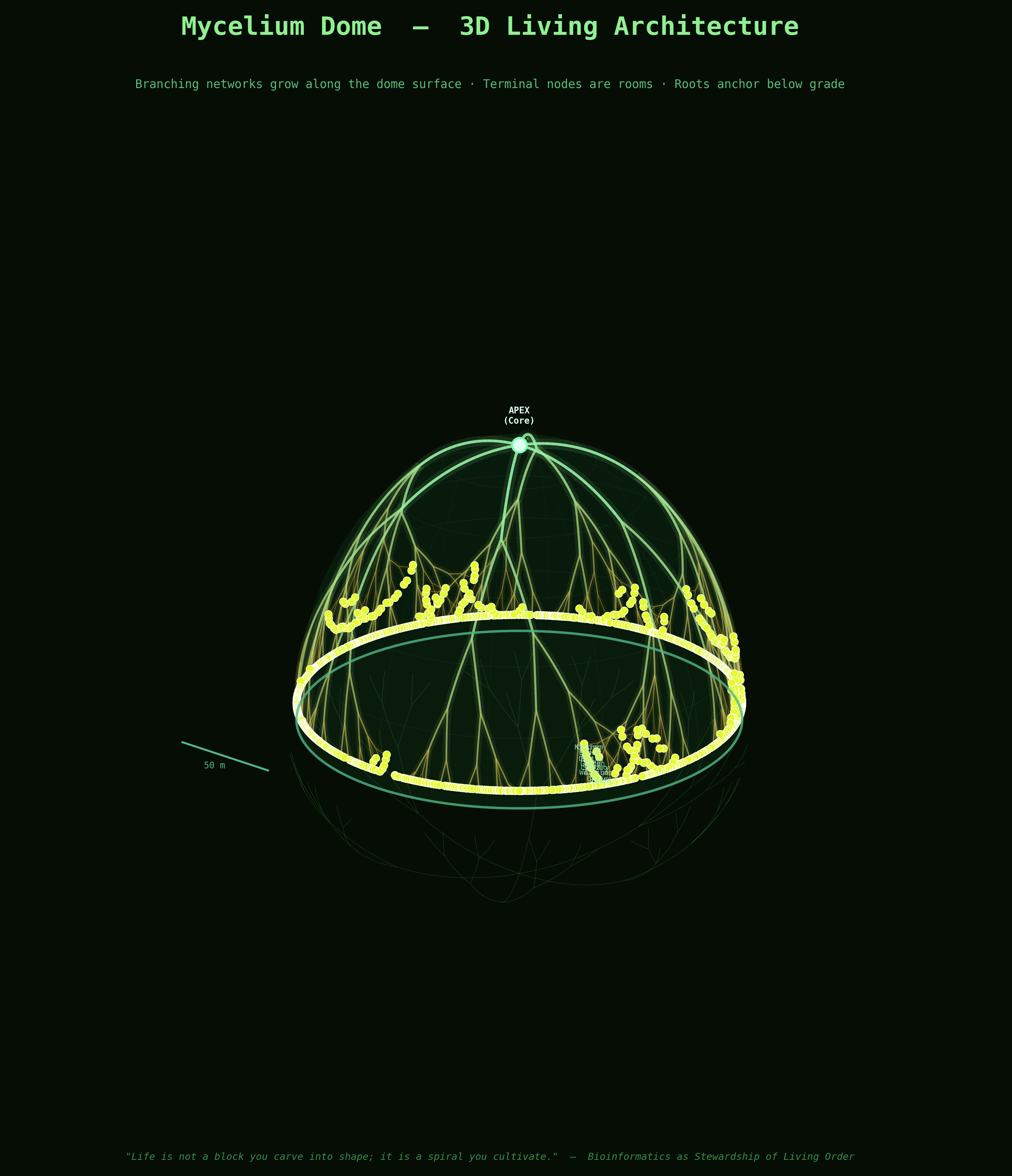
3D simulation of biological growth — branching systems, nutrient gradients, biomechanical forces, and developmental pathways. Outputs structural models and biological pathway suggestions.

Describe a biological structure in plain language. The system converts it into growth algorithms, gene network suggestions, and structural simulations. Biology becomes as accessible as a text prompt.
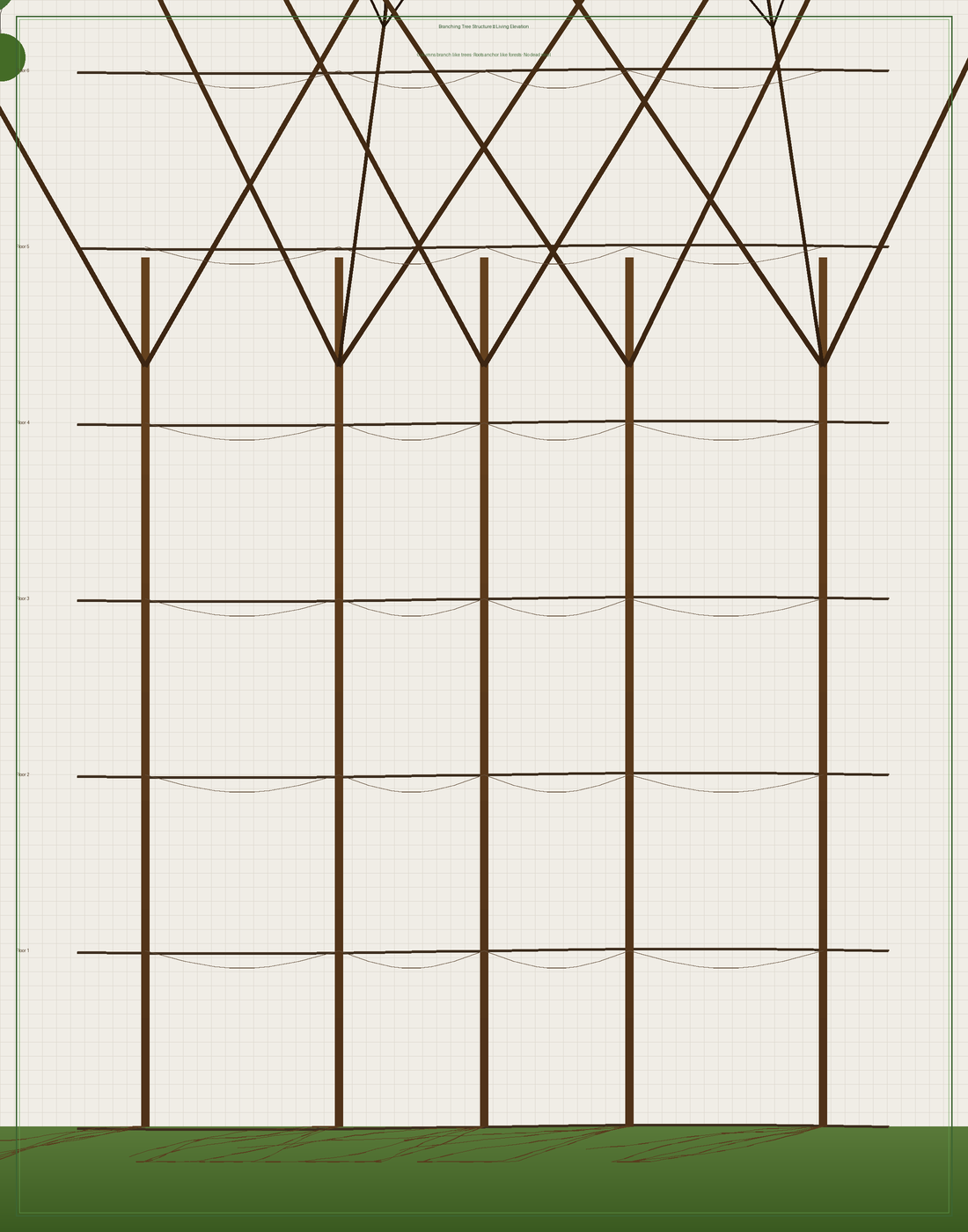
Computer-aided design environment for living systems. Organism blueprinting, gene network visualization, tissue architecture modeling, and ecosystem simulation in a unified workspace.
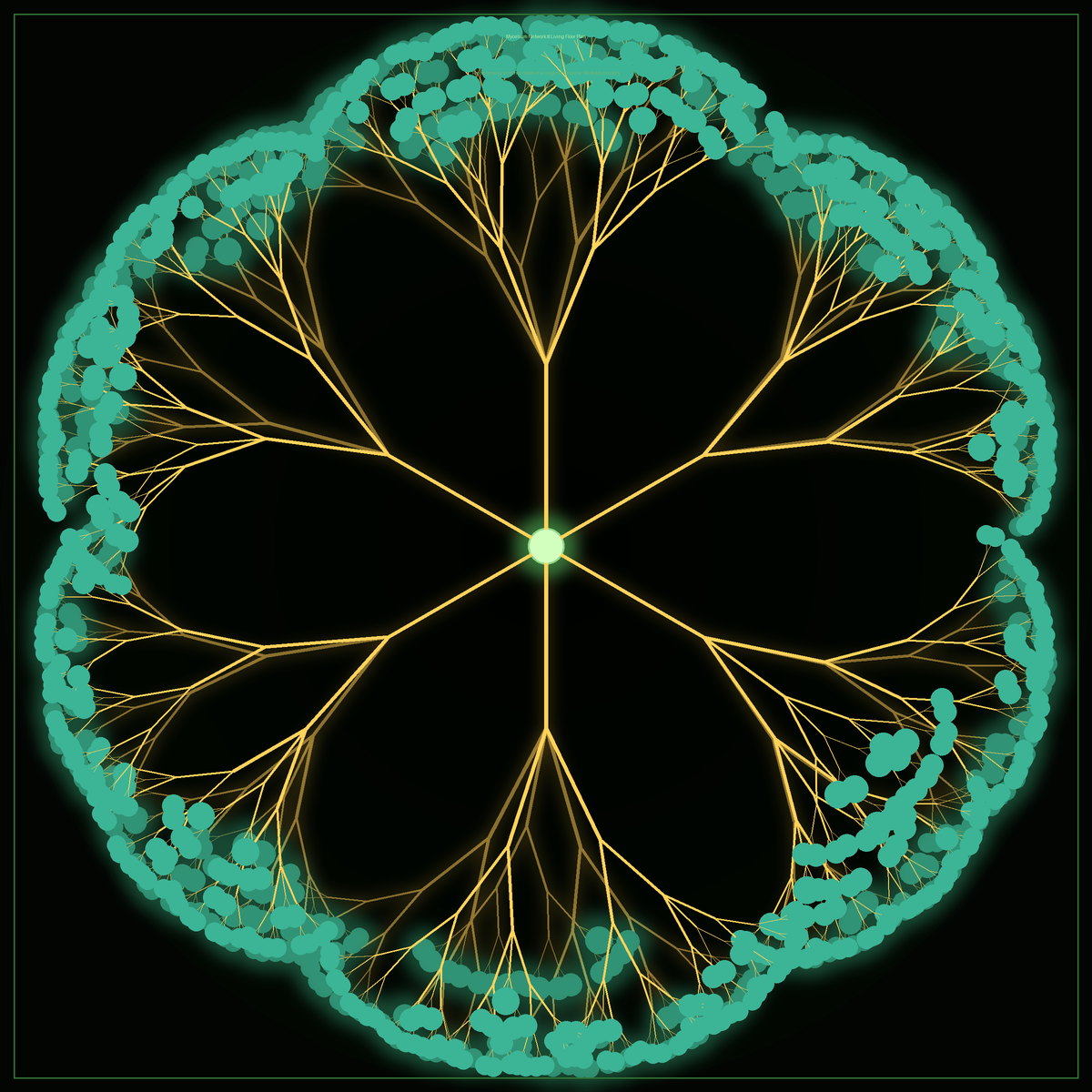
A curated database of biological building blocks — fungal mycelium, plant tissue scaffolds, bacterial cellulose, coral-like mineralization systems — each with growth rules and environmental parameters.
No major platform currently focuses on whole-organism morphology, 3D growth simulation, natural language biological design, or living architecture. That whitespace is the opportunity.
AI-driven organism engineering for pharmaceuticals, agriculture, chemicals, and manufacturing.
Generative models for proteins and antibodies. Growing as foundation AI models mature.
Enterprise software for managing biological data, experiments, and design workflows.
Beyond these three: programmable living materials — bio-grown buildings, carbon-absorbing cities, self-repairing infrastructure — represents an emerging market with no dominant design platform yet.
Most competitors design genes or proteins (Ginkgo Bioworks, Generate Biomedicines) or manage laboratory data (Benchling). They operate at the molecular level.
Living Works operates at a higher level: designing growth processes — from DNA to cells to tissues to organisms to architecture. This is Morphological BioCAD, a category that almost no startups have entered.
| Unfair Advantages | Description |
|---|---|
| Morphogenesis simulation | Physics + biology growth engine — very few groups building this |
| Natural language interface | Biology via prompts; unique UX layer above all competitors |
| Cross-scale design | DNA → cell → tissue → organism → architecture in one platform |
| Living materials market | First-mover in morphological BioCAD for architecture and materials |
Morphogenesis simulation engine, AI design interface, and basic BioCAD platform. Early adopters: universities and synthetic biology labs. Validate product-market fit with academic subscriptions.
Living material design, architecture simulation, and advanced AI models. Partner with architecture firms and materials companies. Launch enterprise tier. Begin IP licensing pipeline.
Programmable ecosystems, organism-scale design, and living infrastructure. The platform becomes the standard design environment for biological systems across industries.
"Living Works builds the tools."
The platform enables biological design across scales — from genome to architecture. It creates real-world solutions: living buildings, carbon-negative materials, programmable ecosystems.
"Spiral Stewards guide how they are used."
The Sagent Creed, True Republic podcast, and 8 Pillars video series create cultural demand for biological design — the same way "Think Different" created demand for personal computers before most people knew why they needed one.
We are seeking early-stage partnerships with investors, collaborators, and institutions ready to build at the frontier where biology meets design. The tools exist. The need is real. The market is forming now.