Track 1 — Bioethics, Equity & Justice  ·  Track 2 — Sustainability

The Moral Case
for Living Architecture

Why Houses Must Grow in Living Shape — Not Stand as Dead Blocks

Sage Clokey · LivingWorks Initiative · 2026
Source texts: Bioinformatics as Stewardship of Living Order · The Spiral Steward · Cover Letter: Voluntarist Biology
"Life is not a resource. Life is a language. And the Steward of Life is learning to speak it." — The Spiral Steward
Preamble

What this document argues

This document lays out the moral case for replacing block-based, industrially manufactured housing with living architecture — structures that grow, adapt, and repair themselves in accord with biological and ecological principles. The argument draws on three original texts written to articulate the ethics of life-based design, interpreted through two justice frameworks.

Bioethics, Equity & Justice: How dead-matter construction perpetuates social harm, cognitive inequality, and moral failure toward future generations.

Sustainability: How living architecture restores rather than destroys the ecological systems on which all human flourishing depends.

Part I
The Moral Diagnosis: What Block Architecture Does to People and Planet
1.1

The Industrial Error Is an Ethical Error

Block houses — rectangular, mass-produced, dead-material structures — are not morally neutral. They are the physical residue of an industrial worldview that begins with a single foundational error: the belief that humans are separate from nature.

From this lie, all downstream harms follow. When planners and architects treat land as substrate rather than ecosystem, communities as consumer units rather than living organisms, and buildings as manufactured objects rather than cultivated places, they produce environments that injure the people who inhabit them.

"The industrial age taught humanity a single devastating lie: that humans are separate from nature. From this lie came monoculture agriculture that destroys soil; cities built as dead zones instead of living habitats; homes built from dead matter that nature itself seeks to burn and clear."

— The Spiral Steward

Industrial engineering designs systems that must first kill what is living: trees become lumber, soil becomes substrate, ecosystems become resources. Only once life is stripped away can control be imposed. This is not a failure of technology. It is a failure of design philosophy.
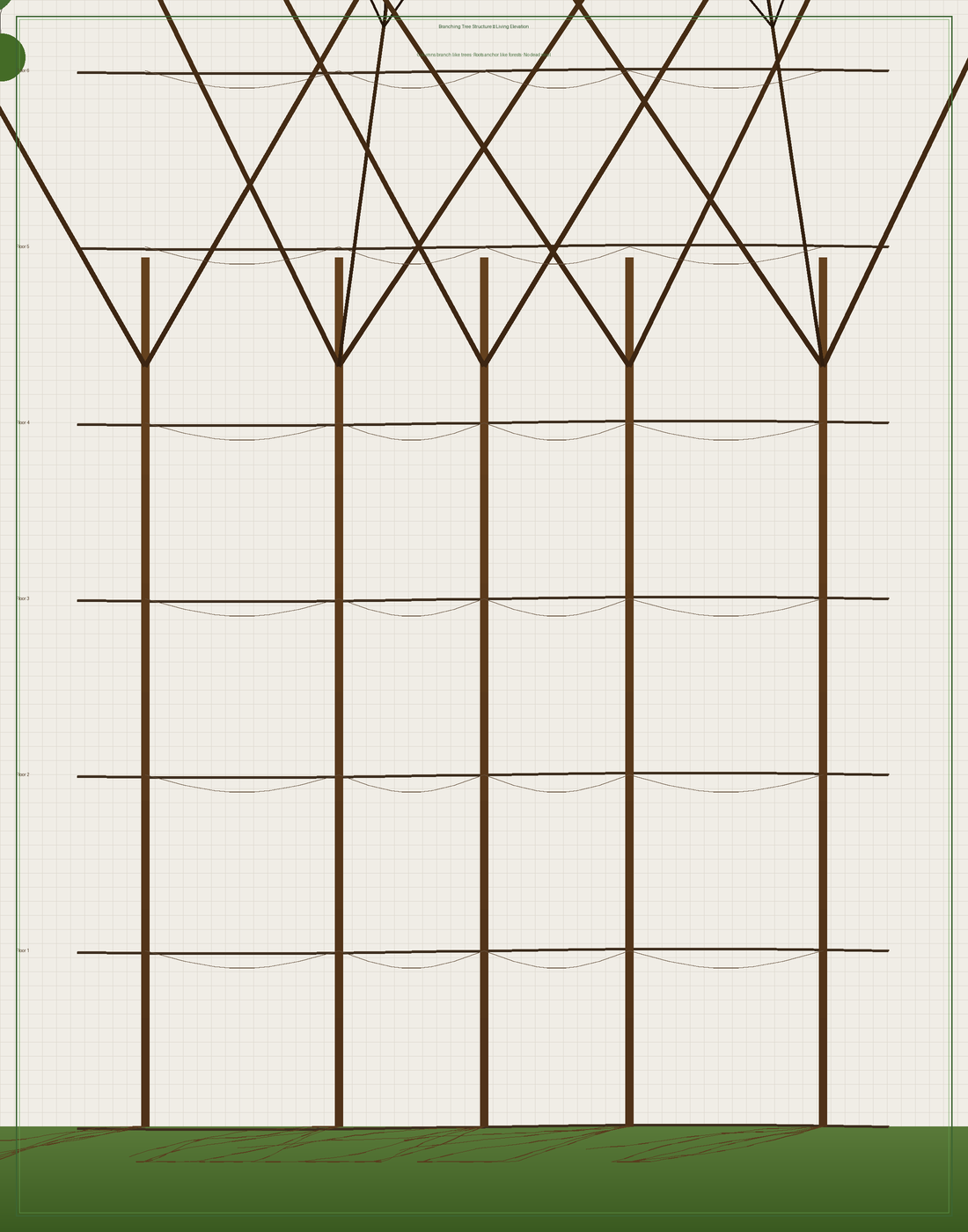
Branching Tree Structure — Dead Engineering vs Living Form
1.2

Architecture Shapes Thought — And Thought Shapes Justice

The moral harm of block architecture is not only physical or environmental. It is cognitive and political. The built environment teaches the mind how to think about power, relationship, and possibility.

"When we build a world around blocks, cubes, and rigid hierarchies, we produce people who think in domination, in control, in compliance, in extraction. Empire architecture creates empire minds. Dead spaces create dead thinking. Living systems create living cognition."

— The Spiral Steward

This is a bioethics claim with direct implications for equity and justice. If the physical shape of a home determines the cognitive habits of its inhabitants, then housing policy is brain policy. Consigning low-income communities to identical grid blocks is not merely an aesthetic choice — it is a structural imposition of conformist cognition, limiting the imaginative and political capacity of those least able to resist it.

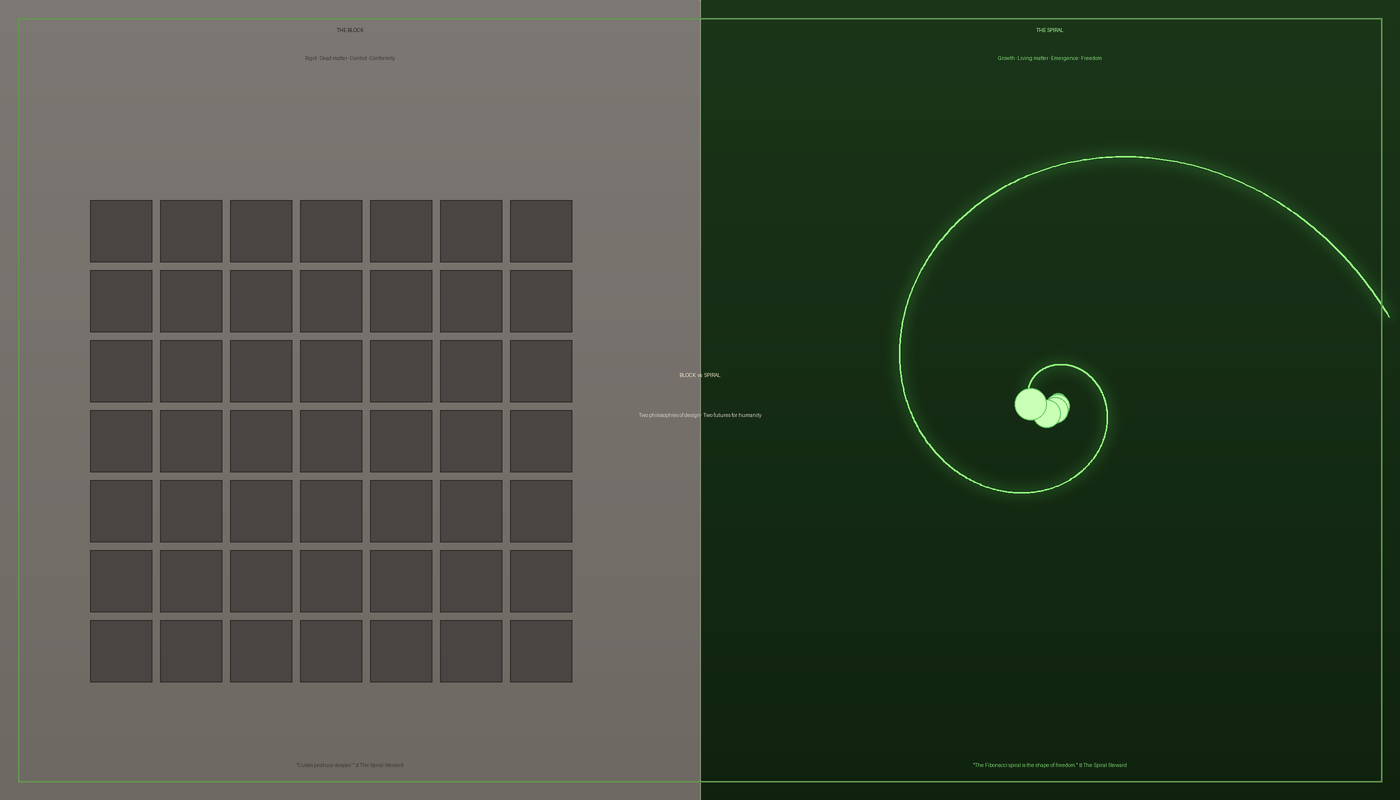
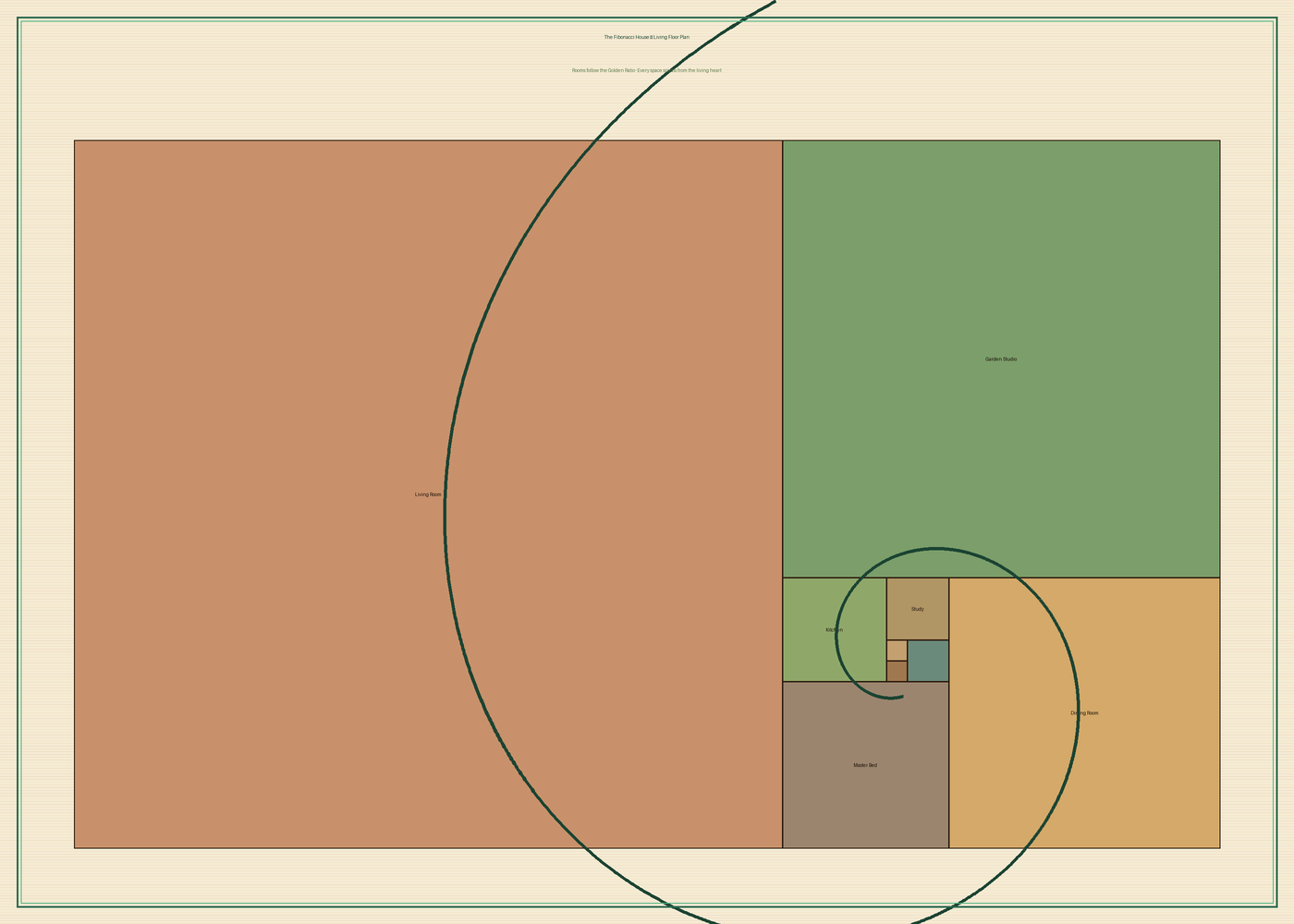
"The cube is the shape of slavery. The Fibonacci spiral is the shape of freedom."

— The Spiral Steward
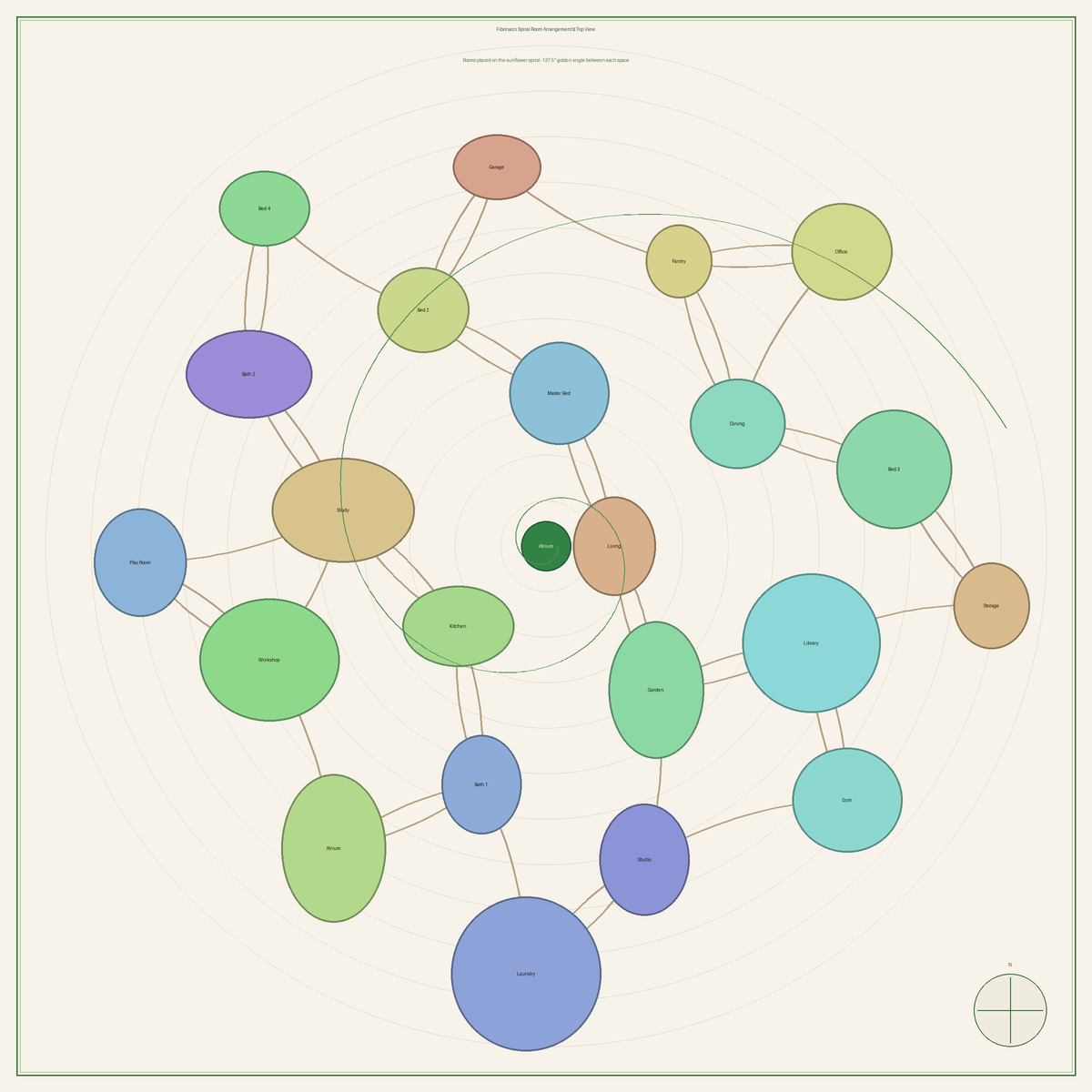
Fibonacci Spiral Room Arrangement — The Shape of Freedom
1.3

Monoculture Is Violence — Against Ecosystems and Against People

Block construction enforces monoculture at every scale. Ecologically, it replaces biodiversity with uniform substrate. Socially, it replaces cultural variety with standardized units. Both forms of monoculture share the same moral signature: the erasure of difference in order to ease control.

"Where life grows in spirals, we imposed straight lines. Where ecosystems rely on diversity, we enforced uniformity. Where systems wanted decentralization, we demanded central control. The ancient Amazonian civilizations understood something modern society forgot: abundance emerges from biodiversity; stability comes from relationship; growth follows spirals, not grids."

— The Spiral Steward

Bioinformatics confirms what indigenous wisdom already knew. Computational analysis of living systems — from genomes to ecosystems — consistently shows that resilience emerges from diversity, not uniformity. A design philosophy that imports monoculture logic into the built environment is not just aesthetically impoverished; it is scientifically and morally wrong.

"Life is not centrally designed, but emergent — a decentralized order created through layers of feedback, adaptation, and symbiosis."

— Bioinformatics as Stewardship of Living Order
Block vs Spiral — Two Philosophies of Design
Part II · Track 1
Bioethics, Equity & Justice: The Right to Live in Living Space
2.1

Housing as a Bioethical Issue

Bioethics traditionally governs decisions about the human body — clinical treatment, genetic privacy, research consent. But the body does not end at the skin. The built environment is a prosthetic extension of the biological organism.

Air quality, light cycles, acoustic texture, spatial variety, contact with living systems: these are not luxuries. They are inputs to human biological health. When block housing cuts people off from biodiversity, natural light gradients, and living material, it imposes a medically significant deprivation — one that disproportionately falls on those with the least economic power to escape it. This is a bioethics failure of the same magnitude as inequitable access to clinical care.

Fibonacci Spiral House — The Right to Live in Living Space
2.2

Equity: Who Bears the Cost of Dead Architecture?

Block construction is cheaper to produce and more profitable to sell at scale. This economic logic determines who gets living space and who gets cubes. Wealthy individuals can afford bespoke, nature-integrated design. Everyone else receives the industrially optimized minimum.

This is not a natural market outcome — it is a structural inequity encoded in zoning law, building code, and financial incentive. The stewardship ethic demands we ask: who benefits from this arrangement? The answer is clear: manufacturers, developers, and insurers who profit from standardization. Those who pay the price — in cognitive restriction, ecological disconnection, and long-term health cost — are the communities with the least political voice.

"To learn the language of life so we can stop treating it like dead matter — and start designing like gardeners, not rulers."

— Bioinformatics as Stewardship of Living Order
2.3

Justice: The Obligation to Restore

Justice is not only the prevention of future harm. It is the repair of existing damage. Centuries of industrial block construction have fractured the relationship between human communities and living ecosystems. A justice-oriented approach to housing demands ecological and spatial restoration — rebuilding environments that allow human biological and social systems to re-integrate with the living world.

This aligns with the voluntarist biology framework: human systems flourish not under central coercion, but under conditions that support voluntary emergence and self-organization. Living architecture restores those conditions.

"My long-term goal is not merely to analyze biological data, but to deepen our collective understanding of how living systems organize themselves — and to use that understanding to help humanity become better stewards of life. I hope to contribute to a new paradigm of bio-design — one that works with living systems instead of trying to dominate them."

— Cover Letter: Voluntarist Biology
The Two Worlds

Block Housing Produces

  • Cognitive conformism and passivity
  • Ecological disconnection
  • Health disparities — light, air, nature-deficit
  • Spatial inequality by income
  • Fragile, non-adaptive structures
  • Cultural homogenization
  • Dead supply chains, dead economies
  • Empire minds shaped by empire shapes

Living Architecture Produces

  • Cognitive diversity and agency
  • Ecological integration
  • Biologically supportive environments
  • Adaptive design accessible to all
  • Self-repairing, resilient structures
  • Place-specific cultural expression
  • Decentralized, regenerative production
  • Living minds shaped by living space
Part III · Track 2
Sustainability: Design That Grows Instead of Decays
3.1

The Ecological Indictment of Block Construction

Block construction is structurally unsustainable because it is extractive by design. It begins with the destruction of living systems — trees cleared, soil compacted, watersheds sealed under concrete — and ends with the manufacture of dead materials that provide no ongoing ecological function and accumulate as waste.

Dead materials cannot adapt, self-repair, or respond to changing conditions. They degrade passively, requiring perpetual energy and resource input to maintain. The result is a built environment that is simultaneously an ecological catastrophe and an economic liability.

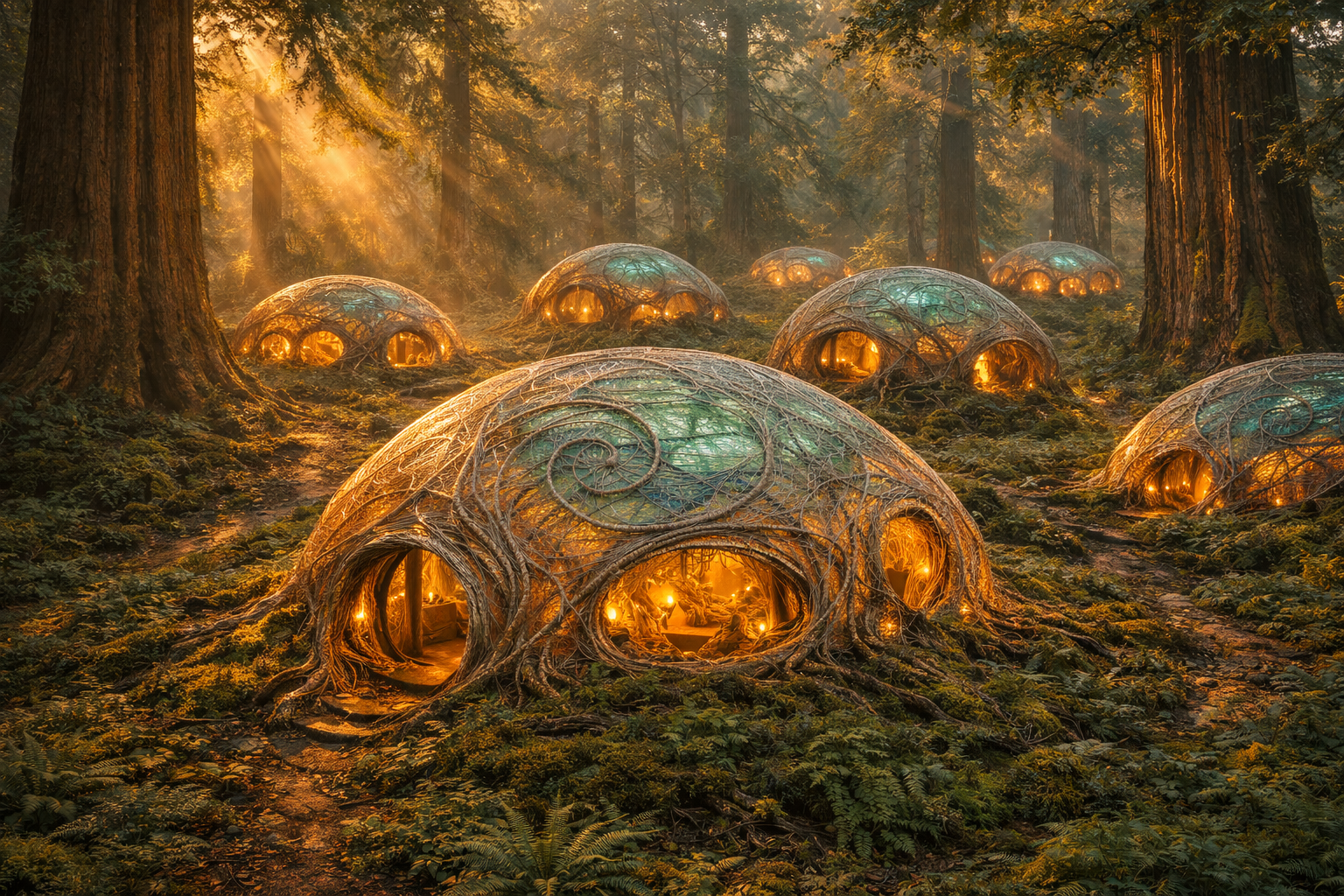
Village of Spiral Domes — Living Architecture vs Dead Construction
3.2

Living Systems Are Inherently Regenerative

The alternative is not simply "green buildings" with solar panels and recycled materials. It is a fundamentally different ontology of design — one that treats the built environment as a cultivated living system rather than a manufactured product.

"The next era is not about building objects. It is about cultivating systems. This is the age of symbiotic design, regenerative systems, decentralized biomanufacturing, structures that grow, adapt, repair, and renew. Design no longer means imposing form. It means shaping conditions. You do not command life. You listen to it. You do not force outcomes. You invite emergence."

— The Spiral Steward

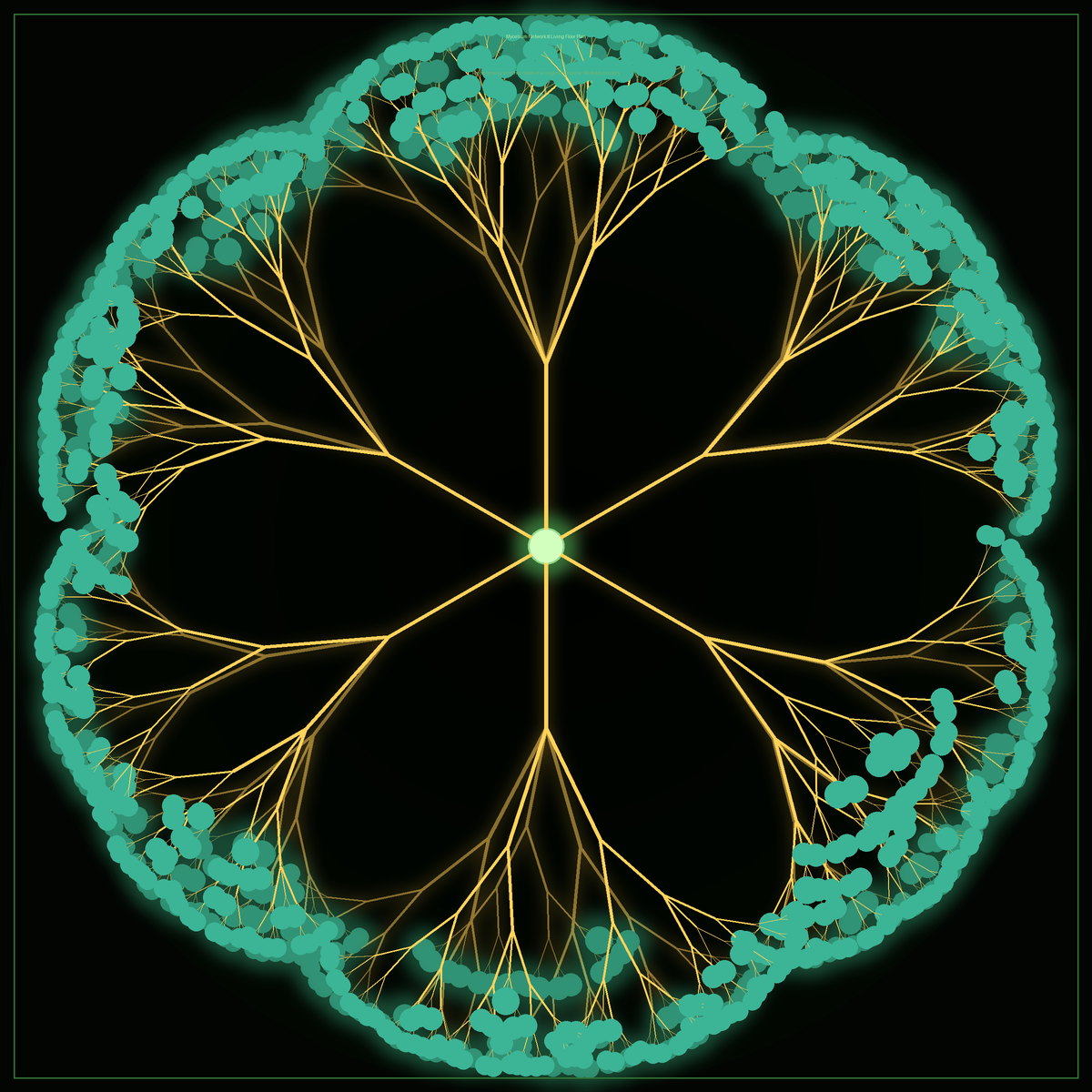
Bioinformatics provides the scientific foundation for this shift. Computational models of biological self-organization reveal the mechanisms by which living systems generate structure from local rules, feedback, and environmental responsiveness. Applying these mechanisms to architectural design is not metaphor — it is the literal application of biological knowledge to the problem of sustainable construction.

Mycelium Network Plan — Self-Organizing Living Systems
3.3

Stewardship as a Sustainability Ethic

Sustainability is not merely a technical challenge — it is a moral orientation. The stewardship ethic offers a coherent foundation for that orientation: work with life's own principles rather than against them.

"Stewardship does not mean leave nature alone forever. It means work with life's own principles rather than against them. It means respecting biodiversity as strength, not mess. It means designing not single rigid outcomes, but possibility spaces — resilient sets of options that allow organisms and communities to adapt."

— Bioinformatics as Stewardship of Living Order
3.4

The Green Flame: Restoration, Not Destruction

The transition from block to living architecture does not require the violent overthrow of existing systems. It requires what the source documents call the Green Flame — the purifying renewal that replaces what is dead with what can grow.

"The green flame does not kill life. It kills what is already dead. It purifies. It renews. It returns decay back into growth. The green flame is the backward Fibonacci spiral: Life → Death → Multiplying Rebirth."

— The Spiral Steward

Applied to the built environment: we do not need to demolish all existing housing. We need to change the logic governing what gets built next. Every new structure can be a demonstration that living shape is possible, affordable, and morally required.

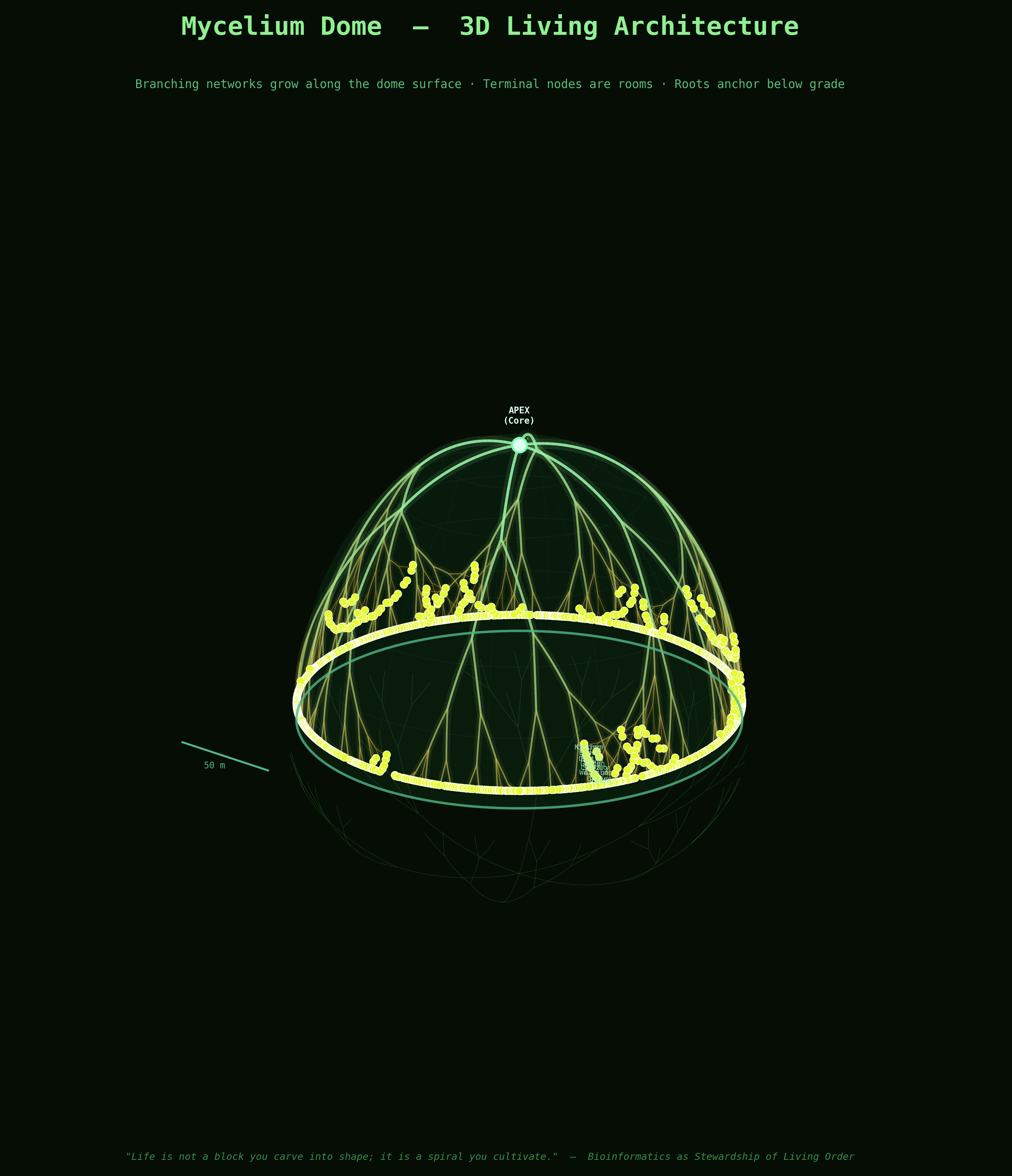
Mycelium Dome — 3D Living Architecture
The Moral Framework — Six Interconnected Principles
01

Design is moral.

The shape of the built environment is not neutral — it determines cognitive, social, and ecological outcomes. Every structure encodes a worldview. Block or spiral. Domination or relationship. Death or growth.

02

Life's principles are not optional.

Biology reveals the rules by which complex systems sustain themselves. Violating those rules — through monoculture, rigidity, and centralized control — produces fragility and harm. The natural world is not a suggestion.

03

Equity demands living space for all.

The current system concentrates nature-integrated design among the wealthy. Justice requires democratizing access to living architecture. A house that disconnects its inhabitants from life is a house that diminishes them.

04

Sustainability requires regenerative design.

Dead-material construction is structurally extractive. Only living systems can produce the self-repairing, adaptive built environment that ecological reality demands. Efficiency without regeneration is just slower collapse.

05

Stewardship replaces domination.

The appropriate human relationship to the built environment — as to nature — is that of gardener, shepherd, steward: guiding growth rather than commanding form. We were placed in the garden to tend it, not rule it.

06

Spirals over blocks.

The Fibonacci spiral is not merely a beautiful shape. It is the shape of growth, of life, of freedom. The block is the shape of control, of stasis, of decay. We choose which world to build with every structure we raise.

Part IV
The Positive Vision: What Living Architecture Makes Possible
4.1

From Engineer to Steward

The moral case for living architecture is not only a critique of what exists. It is an affirmation of a different human role in the world — the role of Steward rather than Engineer, Gardener rather than Ruler.

"We need a new name for the designer of this age. Not Engineer — because engines are dead. This new designer does not work on nature. They work within it. They design like a gardener, not a general. Like a conductor, not a dictator. Like Adam — formed from the soil itself, placed in the garden not to dominate it, but to tend it and keep it in balance."

— The Spiral Steward
The Sagent Creed and the True Republic — Nature vs Empire
4.2

LivingWorks: Design That Emerges

The practical realization of this vision is a design platform that works the way life works — specifying conditions, not shapes; relationships, not objects; flows, not blueprints.

"Imagine a design platform where you don't specify shapes. Instead, you specify: energy flows, nutrient cycles, structural stresses, growth constraints, environmental context, local variation rules. The system then simulates emergence, not assembly. Design becomes: 'If these conditions exist, what wants to grow here?' That is LivingWorks."

— The Spiral Steward

This is not science fiction. It is the direct application of bioinformatics, machine learning, and systems biology to the problem of the built environment. The computational tools already exist. What has been missing is the moral framework to justify using them in this direction.

Evolution represents nature's most powerful example of a decentralized, discovery-driven process. In this sense, it functions much like the voluntary coordination described by systems thinkers across economics, biology, and political philosophy: order emerges not from central control, but from countless local interactions, feedback loops, and adaptive experimentation.

The Trinity Cycle — Arthur · Joseph · Sage

"Life already knows how to build worlds.
We forgot how to listen."

— The Spiral Steward
Village of Spiral Domes — The Living Age

"Not blocks. Spirals.
Not rulers. Gardeners.
Not dead matter. Living order."

— Bioinformatics as Stewardship of Living Order


The moral argument for living architecture is not sentimental. It is grounded in biology, systems theory, and the ethics of equity and stewardship. Block houses are a failure of moral imagination that has become normalized through industrial inertia. They harm the people who live in them, the communities that surround them, and the ecosystems they displace.

The alternative is not idealism. It is the application of what bioinformatics has taught us about how life actually works — and the courage to design accordingly. Life does not build in blocks. Life builds in spirals. And humanity, if it remembers its proper role, builds with life.

Source Documents
The Moral Case for Living Architecture Open PDF →
The Spiral Steward Open PDF →
Bioinformatics as Stewardship of Living Order Open Document →
Cover Letter: Voluntarist Biology Open PDF →